
Mini Embroidery Machine: Small Size, Big Creativity in Modern Embroidery
Embroidery has a long history, but modern technology has changed the way people create embroidered designs. Traditional embroidery often requires skilled handwork and many hours of preparation, while a Mini Embroidery Machine allows users to complete detailed patterns with the help of computerized control systems.
Although mini embroidery machines look simple and compact, there are many interesting technologies behind them. From thread tension control to embroidery speed adjustment, every small detail affects the final stitching quality.
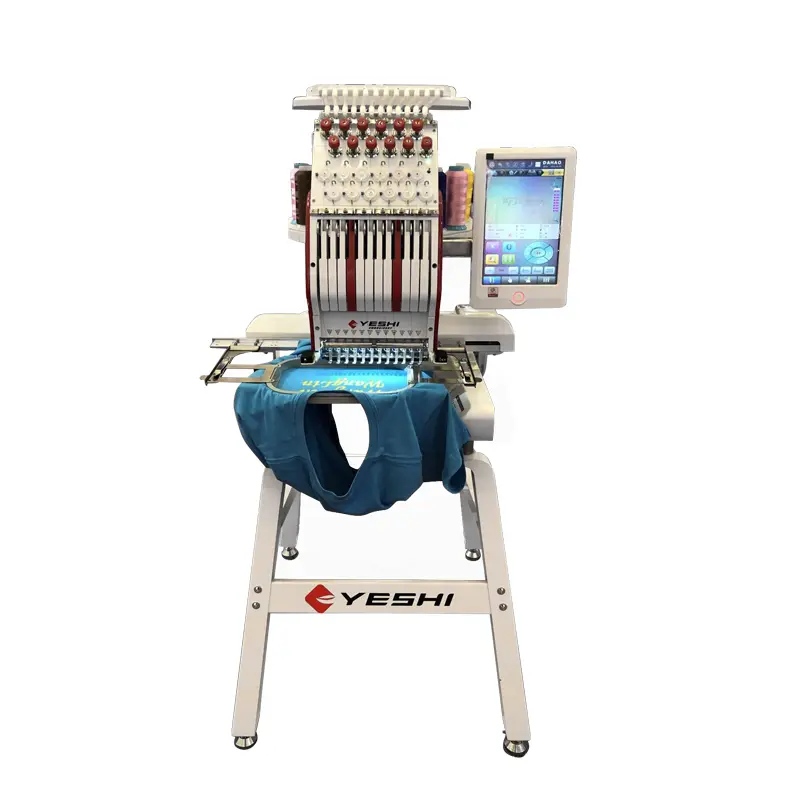
What Is a Mini Embroidery Machine?
A Mini Embroidery Machine is a compact embroidery device designed for small-scale embroidery projects, personal customization, craft businesses, and educational use. Compared with industrial embroidery machines, mini models usually have a smaller footprint, simpler operation, and lower maintenance requirements.
They are commonly used for:
Personalized clothing decoration
Custom logos and initials
DIY crafts
Baby clothing embroidery
Hats, bags, and accessories
Small business customized products
The main difference between a mini embroidery machine and a traditional sewing machine is that an embroidery machine focuses on creating decorative patterns automatically instead of only stitching fabric pieces together.
How Does a Mini Embroidery Machine Work?
Many people think embroidery machines simply "draw patterns with thread", but the actual process involves several coordinated systems.
1. Digital Pattern Conversion
Before embroidery begins, a design needs to be converted into an embroidery file format. The machine reads this file as a series of instructions, including:
Stitch position
Stitch direction
Thread color sequence
Needle movement path
Stitch density
A complex flower pattern may contain thousands of individual stitches, and the machine needs to calculate every movement accurately.
2. Hoop Positioning System
The embroidery hoop holds the fabric tightly and moves according to the digital pattern.
A small mistake in hoop positioning can cause:
Pattern distortion
Uneven outlines
Misaligned colors
This is why professional embroidery operators often spend extra time preparing the fabric before pressing the start button.
3. Automatic Needle Movement
The embroidery head controls the needle movement at high speed. The machine must coordinate:
Needle up and down movement
Hoop movement
Thread feeding
Thread cutting
All these actions happen within seconds, which makes embroidery machines much more precise than manual stitching.
5 Practical Tips to Get Better Embroidery Results
1. Choose the Right Fabric Thickness
A common mistake among beginners is using the same settings for every material.
Different fabrics behave differently:
|
Fabric Type |
Recommended Consideration |
|
Cotton |
Easy to embroider, suitable for beginners |
|
Denim |
Requires stronger needles and proper stabilizers |
|
Knitted Fabric |
Needs additional support to prevent stretching |
|
Leather |
Requires special needles and lower speed |
Fabric movement during embroidery is one of the biggest reasons patterns become uneven.
2. Stabilizer Is More Important Than Many People Think
One interesting fact: many embroidery failures are not caused by the machine itself but by incorrect stabilizer selection.
A stabilizer supports the fabric during stitching and helps maintain pattern shape.
Different applications require different stabilizers:
Cut-away stabilizer: suitable for stretchy fabrics
Tear-away stabilizer: suitable for stable fabrics
Water-soluble stabilizer: useful for delicate decorative work
Professional embroiderers often consider stabilizer selection a "hidden skill" because it directly affects the final appearance.
Industry Cold Knowledge: Why Does Embroidery Thread Shine?
Many people notice that embroidered logos look brighter than printed designs. The reason is not only the color of the thread.
Embroidery thread has a special surface structure.
Most embroidery threads are made with continuous filaments, such as polyester or rayon. The smooth fibers reflect light differently from ordinary fabrics, creating a three-dimensional glossy effect.
This is why embroidered patterns often appear more premium even when the design is simple.
Another Hidden Fact: More Stitches Do Not Always Mean Better Quality
A common misunderstanding is that a higher stitch count means higher quality.
In reality, excessive stitches can create problems:
Fabric becomes stiff
Pattern edges may wrinkle
Production time increases
Thread consumption rises
Experienced embroidery designers focus on stitch efficiency, choosing the right stitch density and direction to achieve a clean appearance.
A well-designed embroidery pattern can sometimes look better with fewer stitches.
Mini Embroidery Machine vs Industrial Embroidery Machine
|
Feature |
Mini Embroidery Machine |
Industrial Embroidery Machine |
|
Size |
Compact |
Large production equipment |
|
Application |
Personal use, small customization |
Mass production |
|
Operation |
Easier for beginners |
Requires professional operation |
|
Production Speed |
Moderate |
High-speed operation |
|
Space Requirement |
Small workspace |
Dedicated production area |
For hobby users, designers, small studios, and customized product businesses, mini embroidery machines provide a practical way to enter the embroidery field.
Maintenance Tips for Longer Machine Life
Even compact embroidery machines require regular care.
Clean the Bobbin Area Regularly
Fabric fibers and thread dust can accumulate inside the machine and affect thread movement.
Replace Needles Periodically
A worn needle may cause:
Broken thread
Uneven stitches
Fabric damage
Keep Thread Quality Consistent
Low-quality thread often creates more problems than users expect, including frequent breaks and poor embroidery appearance.
Future Trends of Mini Embroidery Machines
The embroidery industry is moving toward smarter and more user-friendly solutions.
Future mini embroidery machines are expected to integrate:
More automatic design adjustment
Mobile app control
AI-assisted pattern creation
Better compact motors
More efficient energy use
As personalized products become more popular, compact embroidery equipment is becoming an important tool for creative businesses and individual makers.
A Mini Embroidery Machine is more than a small version of industrial equipment. Behind its compact structure are precise mechanical systems, digital design technology, and years of embroidery experience.
Whether used for hobbies, customized gifts, clothing decoration, or small-scale production, understanding fabrics, threads, stabilizers, and machine settings can significantly improve embroidery results. Small machines are opening new possibilities for people who want to turn creative ideas into real products.
Send Inquiry



X
We use cookies to offer you a better browsing experience, analyze site traffic and personalize content. By using this site, you agree to our use of cookies.
Privacy Policy